I Spent a Week With a $50 No-Name Pocket PC From Amazon. My Spreadsheet Survived.barely
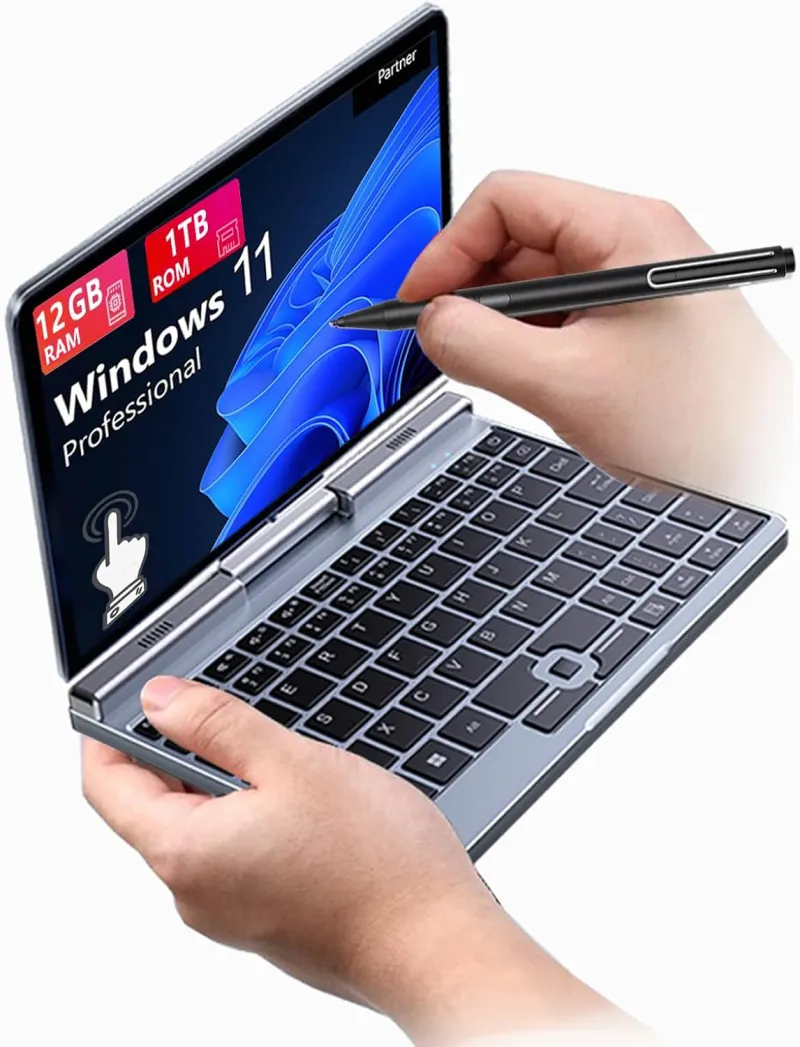
Photo: tiny mini laptop computer cheap handheld device on desk, via m.media-amazon.com
There's a particular corner of Amazon that sells what I can only describe as computers in witness protection. No brand you've heard of, specs listed in a font size suggesting the seller hopes you won't read them, and prices that hover around the cost of a nice dinner for two. I bought one. I spent a week with it. Here's how it went.
The Contender
The listing called it a "Mini Portable Office Computer 5.5 Inch Touch Screen Win10" — which is technically four claims, and roughly two of them held up. Total damage after tax and shipping: $52.37. It arrived in a box that had clearly traveled from Shenzhen via a distributor who added exactly zero value, stuffed with a charging cable and a manual that read like it was translated by a very confident robot.
The specs, for the record: an Intel Atom-era chip, 4GB of RAM, 64GB of storage (about 38GB usable once Windows finished eating), and a 5.5-inch 1080p display that's actually the one genuinely pleasant surprise here.
Day One: The Setup Tax
Booting a machine like this is an exercise in patience. Windows Update chewed on itself for the better part of two hours. The fan — yes, it has one — sounds like a distant hair dryer that's considering its options.
But here's the thing nobody tells you about these budget pocket PCs: once it settled down, it was... fine. Genuinely fine. Chrome opened. Gmail loaded. I typed an email on the cramped little keyboard accessory and sent it, and the recipient had no idea it came from a device that costs less than a video game.
The Real Work Test
Midweek, I pushed it into actual productivity territory. Google Docs handled editing without much complaint, though scrolling long documents had a stutter that showed up like clockwork. Excel on the desktop — not the web version — was where the wheels got wobbly. A 40,000-row sheet turned the poor thing into a slideshow.
Media consumption? This is the sweet spot. A 1080p screen on a device this size looks razor sharp, and YouTube ran smoothly at 1080p for about three hours on a charge. Netflix through the browser worked. VLC chewed through local files. If your definition of a pocket PC is "a tiny Netflix machine with a keyboard," congratulations, this is a five-star device.
The Gaming Question
Let's be honest about expectations. I installed a couple of older titles — think 2012-era indie games and a very old Counter-Strike — and they ran. Nothing from this decade, nothing demanding, nothing with ray tracing in its vocabulary. Minecraft at low settings was playable. If you're buying this to replace a gaming handheld, you will be disappointed, and that disappointment is on you, not the $52 machine.
The Dealbreakers
A few things genuinely soured me by the end of the week:
- Battery life topped out around four hours with light use, and the battery indicator was essentially fiction
- The touchpad on the keyboard attachment has the responsiveness of a damp sponge
- Storage anxiety is real — Windows Update alone nearly bricked it by filling the drive
- No brand means no support — if it dies in month three, you're out fifty bucks and that's the whole story
Verdict: Entry Point or E-Waste?
Here's my honest take after seven days: this thing is not a laptop replacement, and pretending otherwise is how you end up with a drawer full of regret. But it is a real Windows computer that fits in a jacket pocket and handles email, docs, and streaming without embarrassment. For a student on a strict budget, a tinkerer who wants a Linux playground, or someone who needs a backup machine, it earns its keep.
The disposability concern is legitimate, though. These devices have no upgrade path, no repair ecosystem, and a lifespan that's frankly a coin flip. At $50, the environmental math gets murky — buying three of these over three years versus saving for one proper handheld isn't obviously worse, but it isn't obviously better either.
Would I use it as my only computer? Absolutely not — and you can read about that experiment elsewhere on this site. Would I recommend it to my cousin who just needs something cheap for email and Hulu at the coffee shop? With real caveats, yes.
Fifty dollars buys you a genuine, if compromised, computing experience. Just go in knowing exactly what you're buying: not a flagship killer, not a gaming rig, but a tiny, stubborn little PC that mostly does the job. Mostly.