The Battery Percentage Myth: What Flagship Phones Are Really Hiding From You
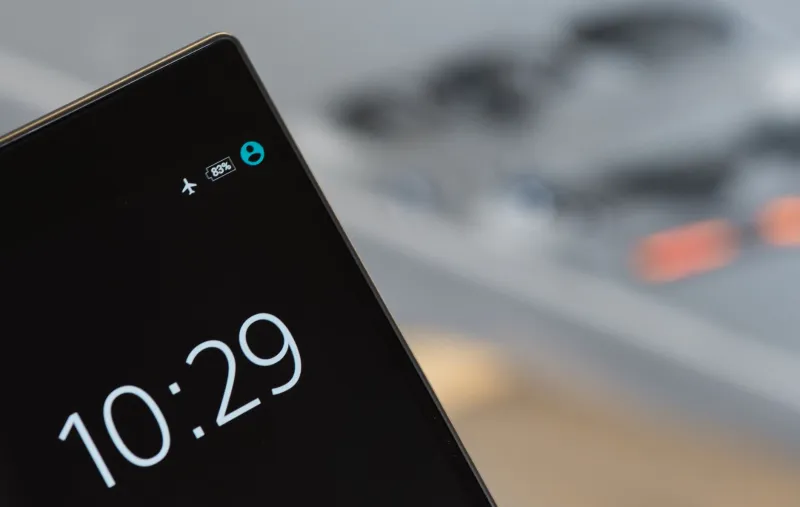
You've been there. You pick up a shiny new flagship, the box brags about "up to 29 hours of video playback" or "all-day battery life," and within six months you're hunting for an outlet by 3 PM. It's not your imagination, and it's not just heavy usage. The battery life numbers plastered on marketing materials are, in many cases, a polished version of reality that barely resembles how most people actually use their phones.
We decided to dig into this properly. Over several weeks, we ran a handful of current flagship devices — including the Samsung Galaxy S24+, the iPhone 15 Pro, and the Google Pixel 8 Pro — through both manufacturer-style benchmark tests and real-world usage simulations to see exactly where the gap lives.
Spoiler: it's a wide one.
How Manufacturers Actually Calculate Battery Life
First, let's talk about how these numbers get made in the first place. Phone makers typically use a handful of standardized tests to generate their battery claims. The most common is video playback — usually a locally stored 1080p video looped on airplane mode with brightness set somewhere around 50%. That's it. No notifications, no background apps refreshing, no LTE or 5G radio pinging towers every few seconds.
Apple, for instance, measures iPhone battery life using streaming video over Wi-Fi in some cases, but still under controlled lab conditions that strip out the noise of everyday life. Samsung's figures often come from internal testing methodologies that aren't fully disclosed. Third-party benchmarks like PCMark's Work 3.0 battery test offer a more reproducible standard, but even those simulate a workload that skews lighter than what most Americans put their phones through on a commute or at work.
The bottom line: there's no universal, federally mandated testing standard for smartphone battery life. Manufacturers are essentially grading their own homework.
What's Actually Eating Your Battery
When we ran our own tests, we tracked four major variables that consistently drove real-world runtime well below advertised figures.
Screen brightness was the single biggest culprit. Running a phone at full brightness — which is pretty much what you're doing outside on a sunny day in July in Phoenix or Miami — can cut battery life by 30 to 40 percent compared to the 50% brightness used in most lab tests. The iPhone 15 Pro's ProMotion display, with its adaptive 120Hz refresh rate, is particularly hungry when brightness climbs.
Network type matters more than most people realize. Connecting to a 5G mmWave network (the kind you might hit in dense urban areas like downtown Chicago or Manhattan) is significantly more power-hungry than sitting on LTE or sub-6GHz 5G. In our testing, the Galaxy S24+ lost nearly 20% more battery per hour while actively connected to a mmWave 5G network versus a standard LTE connection doing the same tasks.
Background app behavior is the sneaky one. Apps like Instagram, TikTok, and even Google Maps refresh aggressively in the background, keeping radios and processors from dropping into low-power states. In our tests, phones with a fresh app install and minimal background activity lasted noticeably longer than devices mirroring a typical user's app ecosystem.
Thermal conditions also played a role. Phones running hot — whether from gaming, navigation in direct sunlight, or wireless charging — throttle performance and manage battery draw differently. A device that rates well in a 70-degree lab might behave differently sitting on your dashboard in August.
The Real Numbers We Saw
Here's where it gets concrete. Under our simulated real-world test — a mix of social media scrolling, GPS navigation, streaming music, occasional video, and background email sync at 75% brightness on LTE — here's roughly what we observed compared to manufacturer claims:
- iPhone 15 Pro: Apple claims up to 23 hours of video playback. Our mixed-use test yielded around 6.5 to 7.5 hours of screen-on time before hitting 20% battery.
- Samsung Galaxy S24+: Advertised for "over a day" of use. We saw 7 to 8.5 hours of screen-on time under similar conditions.
- Google Pixel 8 Pro: Google markets "over 24 hours" with Extreme Battery Saver. Without that mode active, real-world screen-on time landed around 7 hours.
None of these are bad phones. They're all genuinely solid performers. But the delta between "up to 29 hours" and "about 7 hours of actual use" is the kind of thing that deserves more transparency.
A Better Way to Compare Devices
If you want to make smarter comparisons before buying, here's what we recommend looking at:
Screen-on time (SOT) is the most honest single metric. It measures how long the display stays active during actual use, which is the best proxy for a real day's work. Look for user-reported SOT figures on forums like Reddit's r/Android or dedicated communities for iPhone users — real people with real usage patterns tell a more accurate story than press releases.
Battery capacity in mAh relative to display size and resolution gives you a rough efficiency baseline. A 5,000 mAh battery in a phone with a 1080p display will generally last longer than the same capacity powering a QHD+ panel with 120Hz.
Check for adaptive refresh rate implementation. Not all 120Hz displays are equal. Some phones drop to 1Hz during static content; others don't manage the transition as smoothly, burning extra juice unnecessarily.
Charging speed matters for recovery. A phone that hits 50% in 20 minutes might be more practical for your lifestyle than one with a slightly larger battery that charges slowly.
The Bigger Picture
Manufacturers aren't lying, exactly. They're just presenting their best-case scenario as if it's representative of typical use. It's a bit like a car company advertising highway MPG without mentioning what happens in stop-and-go traffic on the 405.
Until there's an industry-wide standard for real-world battery testing — something consumer advocates have pushed for without much success — the responsibility falls on us as buyers to look past the spec sheet. The good news is that the tools and communities to do that research exist. You just have to know where to look.
At PocketPC Techs, we'll keep running these tests so you don't have to take the marketing copy at face value. Because your phone should last as long as your day does — not just as long as a looping video in a temperature-controlled lab.