Bend Over Backwards: The Hard Truth About Whether Foldable Devices Actually Improve Your Portable Life
Let's be honest — the first time you open a foldable phone in front of someone who hasn't seen one, you feel like a minor celebrity. The gasps are real. The "wait, does that actually fold?" questions are endless. And for a brief, glorious moment, you feel like you're living in a sci-fi movie.
Then you drop it screen-side down on a concrete floor and your stomach hits the ground first.
Foldables have been "the future" for going on five years now, and yet here in 2025, they still represent a tiny slice of the portable device market. We spent several weeks putting a handful of the most popular folding form factors through the kind of real-world abuse that no press release will ever mention — and what we found should give any serious pocket PC enthusiast serious pause before swiping that credit card.
The Hinge: Engineering Marvel or Ticking Clock?
Every foldable manufacturer will happily tell you their hinge is rated for 200,000 folds. That sounds like a lot until you do the math. If you open and close your device 100 times a day — which is pretty conservative for a primary device — you're hitting that limit in about five and a half years. That's roughly the lifespan of a premium smartphone before most people upgrade anyway, so on paper, it checks out.
But the lab conditions used to generate that number and the conditions inside your front pocket are two very different environments. Real-world hinges collect dust, lint, and the occasional popcorn kernel from movie night. Over time, that debris works into the mechanism and creates friction that no manufacturer's stress test accounts for. We noticed audible grit in hinge movement on two out of three test devices after just three months of normal daily carry — no drops, no abuse, just life.
That's not a catastrophic failure. But it's a reminder that you're carrying a precision mechanical component in an environment that actively hates precision mechanical components.
The Crease Problem Nobody Wants to Talk About
Here's the thing manufacturers have gotten much better at not mentioning in their keynotes: the crease is still there. Every current foldable display develops a visible line at the fold point, and while some brands have minimized it significantly compared to early generations, it hasn't disappeared.
Under normal indoor lighting, you can often ignore it. But take your device outside on a sunny afternoon, angle the screen slightly, and that crease catches light in a way that's genuinely distracting during video playback or while reading. For a device that's supposed to excel at giving you a larger screen experience, having a permanent visual artifact running straight through the middle of that screen is a strange design compromise to accept.
We're not saying it ruins the experience — but we are saying it's the kind of thing you stop noticing in reviews written the day after unboxing and start noticing every single day afterward.
Pocket Reality Check
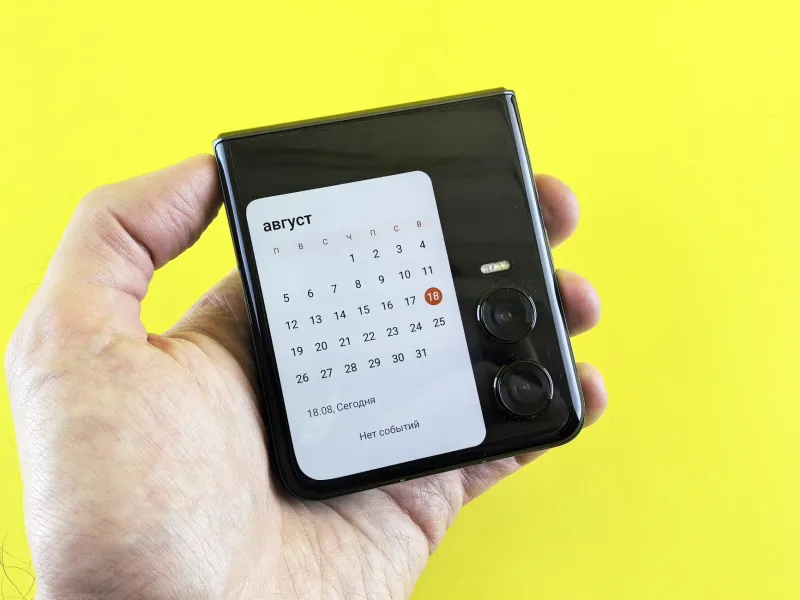
The core promise of a folding phone — at least the clamshell variety — is that you get a full-sized screen in a more pocketable package. And to be fair, that pitch has real merit. A device that folds in half genuinely does fit more comfortably in tighter pockets than a standard candy-bar slab.
But book-style foldables, the ones that open up to a small tablet, tell a different story. Folded, they're noticeably thicker and heavier than a comparable non-folding flagship. You're essentially carrying the weight and bulk of a tablet that's been folded in half. For anyone who prioritizes true pocketability — which is kind of the whole point of pocket PC culture — that's a meaningful trade-off.
We also ran an informal lint intrusion test. Both form factors accumulated debris along the fold seam faster than a standard device accumulated it anywhere. The gap, however tight, is a magnet for the kind of microscopic junk that lives in pockets and bags.
What You Actually Gain (And It's Not Nothing)
It would be unfair to frame this as purely negative, because there are genuine use cases where a foldable device earns its premium. If your workflow involves a lot of side-by-side app use — say, referencing a document while composing an email, or watching a walkthrough video while playing a game — the expanded screen real estate on a book-style foldable is legitimately useful in a way that a standard phone screen isn't.
For portable productivity specifically, having a larger canvas without carrying a separate tablet is a compelling argument. Spreadsheets, document editing, and multi-window browsing all benefit from the extra space in ways that aren't just cosmetic.
Clamshell foldables make a slightly different case. They're more about form factor elegance than raw screen size — the appeal is a full display experience that folds into something smaller when you're done. If you genuinely value that aesthetic and tactile experience, and you're willing to pay for it, that's a legitimate preference.
The Price Conversation
Foldables still carry a significant premium over comparable non-folding devices. You're typically paying $400 to $600 more for the folding mechanism, the specialized display, and the engineering required to make it all work. That's a real number, and it deserves honest scrutiny.
For that same money, you could buy a top-tier standard flagship and a capable standalone tablet — two devices that individually outperform the foldable at their respective tasks, with no hinge to worry about and far easier repair paths if something goes wrong.
The foldable's pitch is convenience and the unified experience of one device. Whether that's worth the premium depends entirely on how much you value consolidation over raw performance and repairability.
So Does the Bending Actually Help?
For most portable computing use cases, the honest answer is: not enough to justify the cost and the compromises. The crease, the hinge anxiety, the lint vulnerability, and the price premium all add up to a device that asks a lot of you in exchange for a bigger screen and a party trick.
If you're a power user who genuinely works across multiple apps simultaneously on your phone, a book-style foldable might actually change your daily workflow. If you're drawn to the clamshell form factor for style and pocketability, that's a valid lifestyle choice.
But if you're buying a foldable because you think it'll make your portable computing experience fundamentally better — faster, more capable, more reliable — the evidence doesn't really support that. Traditional form factors remain more durable, more repairable, more pocketable, and significantly cheaper.
The future might still belong to folding screens. But right now, in 2025, that future is still asking you to pay a lot of money to beta test it.