Sealed Shut: How the Race to Make Thinner Handhelds Is Quietly Killing Your Right to Fix Them
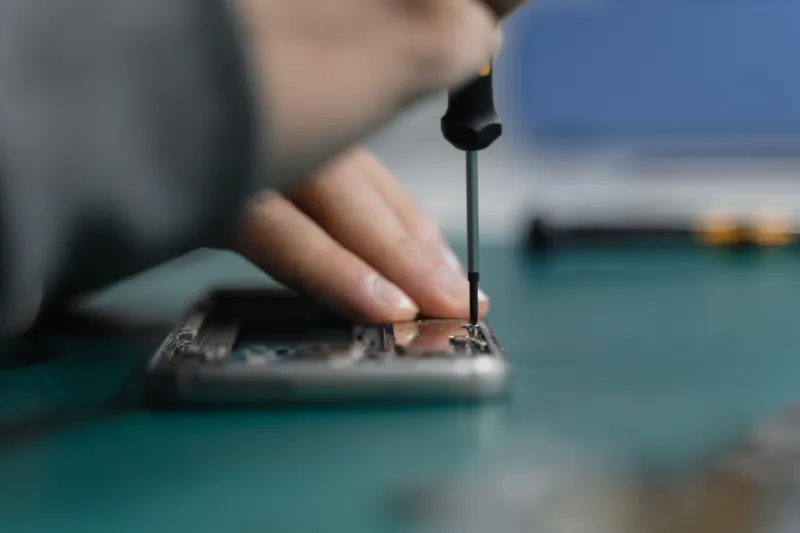
There's a repair shop in Austin, Texas that keeps a wall of shame. It's not officially called that — the owner, a former electronics technician named Marcus who's been fixing devices for over a decade, calls it the "conversation starter." It's a pegboard covered in components he's had to destroy just to access the part he actually needed to replace. Adhesive-soaked battery packs. Shattered display assemblies cracked during disassembly. Logic boards that required heat gun work intense enough to risk damaging adjacent components.
"The devices keep getting prettier," Marcus told us. "They also keep getting more expensive to fix. Those two things are not a coincidence."
He's right. And if you care about portable computing — about actually owning the device in your pocket rather than just licensing it until it breaks — this is a conversation worth having.
Thinner Is a Design Religion, Not a Consumer Benefit
Ask any hardware engineer off the record and they'll tell you the same thing: below a certain threshold, thinness stops serving the user and starts serving the marketing team. The difference between a 6.5mm device and a 7.2mm device is not something your hands can meaningfully detect. It does not change how the device performs. It does not improve your experience in any measurable way.
What it does do is force compromises that cascade through every other design decision. Thinner chassis mean less space for battery volume. Less space for battery volume means either smaller batteries or non-standard cell shapes that are harder and more expensive to replace. Thinner profiles mean components are packed tighter, heat dissipation becomes a greater engineering challenge, and the tolerances for repair shrink to the point where you need a surgical suite instead of a screwdriver.
The result is a generation of portable devices that are genuinely impressive to look at and genuinely nightmarish to service.
What a Teardown Actually Tells You
Repair advocacy organizations and independent teardown specialists have been scoring devices on repairability for years, and the trend lines are not encouraging for the handheld PC market. Proprietary fasteners, components soldered directly to motherboards that could otherwise be modular, and aggressive adhesive application have all become standard practice across the industry.
Compare a flagship handheld from five years ago to a current model. The older device likely had a back panel held on by screws — actual screws you could remove with a standard tool. The battery was probably accessible with basic equipment and replaceable in under twenty minutes by someone with moderate technical confidence. The display assembly, while delicate, was designed with replacement in mind.
The current equivalent often has a fused display and digitizer assembly bonded with industrial adhesive, a battery that requires heat application and significant force to extract without damage, and proprietary screws that require specialty bits most people don't own. A repair that used to cost $60 at your local shop now costs $180 — if the shop will even take it on.
"I've started turning away certain models," Marcus told us. "Not because I can't do the work, but because the risk of collateral damage during disassembly is high enough that I can't guarantee the outcome. That's not a good position to be in as a repair professional."
The Parts Pipeline Problem
Thinner, more integrated designs don't just make repair harder — they make parts availability worse. When a component is modular and standardized, third-party suppliers can manufacture compatible replacements. When it's proprietary and soldered, you're entirely dependent on the original manufacturer for replacement parts, and manufacturers have historically been reluctant to make those parts widely available to independent repair shops.
This is starting to change, slowly, under pressure from right-to-repair legislation gaining traction in several US states. California, Minnesota, and Colorado have all passed laws requiring manufacturers to provide repair documentation and parts access under certain conditions. It's progress. But the legislative pace is slower than the design pace, and manufacturers have shown creativity in finding compliant-but-unhelpful ways to technically satisfy these requirements.
What Repairable Actually Looks Like
It's not all bad news. A handful of manufacturers — particularly in the handheld gaming PC space — have made repairability a genuine design priority rather than an afterthought. Some devices in this segment use standard Phillips and Torx fasteners throughout, provide publicly available service documentation, and design battery and storage components for relatively straightforward replacement.
The trade-off is usually a few extra millimeters of thickness and occasionally a slightly more utilitarian aesthetic. For the portable computing enthusiast who plans to own a device for four or five years, that's a trade worth making. A device you can maintain is a device that holds its value, both financially and practically.
"Give me a device I can open without a heat gun," Marcus said, "and I'll give you a customer who keeps coming back instead of buying new every two years."
What to Actually Look For Before You Buy
Before committing to your next handheld, do some homework that goes beyond spec comparisons. Look up whether independent teardown assessments are available for the device. Check whether the manufacturer sells replacement parts directly or through authorized distributors. Search for repair documentation — if it doesn't exist publicly, that's a signal.
Ask your local repair shop if they've worked on the model you're considering. Their answer will tell you more about long-term ownership costs than any benchmark review.
Consider the total cost of ownership rather than just the purchase price. A device that costs $150 less upfront but requires a $200 manufacturer service visit for a battery replacement isn't actually cheaper over a three-year ownership window.
The Bigger Picture
The repairability conversation isn't just about saving money on fixes. It's about what kind of relationship you want to have with the devices you carry every day. A portable computer that you can maintain, upgrade, and keep running is fundamentally different from one you're expected to replace when it becomes inconvenient.
The thinness arms race has produced some genuinely beautiful hardware. But beauty that can't survive a cracked screen or a degraded battery without a factory service visit is a fragile kind of beauty. For devices that are supposed to go everywhere with you, that fragility has real costs.
The best pocket PC is one that's still working five years from now. Right now, the industry isn't designing for that. Maybe it's time we started demanding it.