Why Hardcore Gamers Are Selling Their Consoles and Going All-In on Handheld PCs
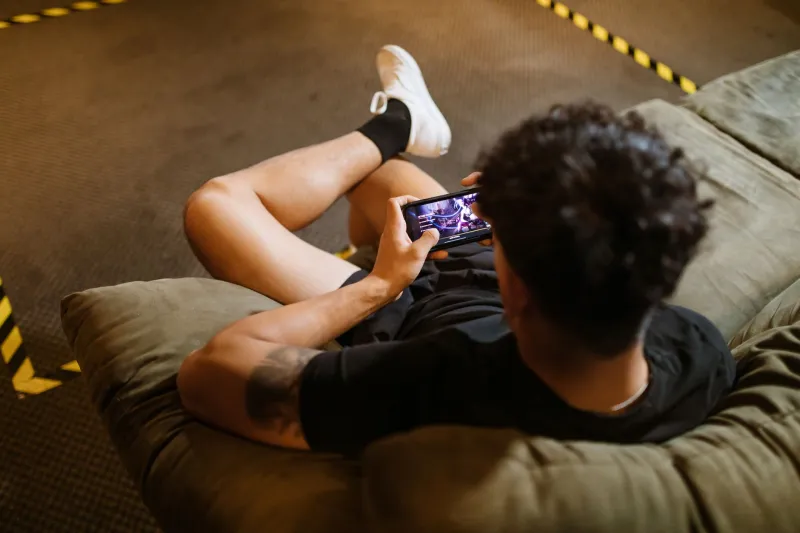
For most of gaming history, "serious gamer" and "portable gaming" lived in completely different ZIP codes. Handhelds were for kids on road trips. Real gaming happened on a couch with a big TV and a proper controller, or at a desk with a mechanical keyboard and a high-refresh monitor. The idea that a device you could slide into a backpack would satisfy a hardcore gamer was, for a long time, genuinely laughable.
That's no longer the case. In 2025, something is quietly but meaningfully shifting in how dedicated gamers think about their hardware — and it's not just enthusiasts experimenting on the side. People are selling their PlayStation 5s. Their Xbox Series X consoles are going on Facebook Marketplace. And they're replacing them with handheld PCs that run Windows, access their existing Steam libraries, and fit in a jacket pocket.
This isn't a fringe movement anymore. It's worth understanding why it's happening.
The Library Problem That Consoles Still Haven't Solved
Start with the most practical issue: game libraries. When you buy a PlayStation 5, you're buying into Sony's ecosystem. Your games live there. If Sony discontinues the platform, raises prices, or decides a title you love isn't worth keeping in the store, your options are limited. The same goes for Xbox, though Microsoft's Game Pass model softens the blow somewhat.
Steam is different. Your library is yours — or as close to yours as digital licensing allows. Thousands of titles, including the entire back catalog of PC gaming going back decades, are accessible on a device like the ROG Ally X or the Steam Deck. Emulation is also significantly more accessible on Windows-based handhelds, which opens up retro libraries that console platforms actively suppress.
Darren Khalil, a 31-year-old software engineer from Chicago who sold his PS5 in early 2025, puts it bluntly: "I had maybe 15 games on PS5. On my Ally X, I have access to literally hundreds of games I already owned on PC. It wasn't even a close call once I thought about it that way."
The Flexibility Argument
Consoles are, by design, single-purpose devices tied to a television. That works great if you live alone or have a dedicated gaming room. It works less great if you share a living space, travel frequently, or just want to play in bed without dragging a TV into the equation.
Handheld PCs eliminate that constraint entirely. The same device you use to play Elden Ring on a plane can dock to a monitor at home for a near-console experience. It can stream to a TV via HDMI. It can run your productivity apps when you need them. The flexibility is genuinely different in kind, not just degree.
Amanda Torres, a freelance graphic designer based in Austin, Texas, describes herself as a lifelong console gamer who made the switch after a cross-country move. "I didn't want to set up a whole TV gaming situation in my new apartment," she says. "I tried the Legion Go on a whim, and I haven't looked back. I play more now than I did when I had a dedicated console setup."
What the Trade-offs Actually Look Like
This wouldn't be an honest look at the trend without acknowledging the real compromises involved.
Raw performance is still a gap. A PlayStation 5 running a first-party title at 60fps with ray tracing enabled is still doing things current handheld PCs can't match at the same visual fidelity. The best handhelds are roughly equivalent to a mid-range gaming PC from a couple of years ago — impressive for the form factor, but not cutting-edge by desktop standards.
Battery life is another honest limitation. Expect two to three hours of demanding gaming on most devices before you're reaching for a charger. That's fine for most use cases, but it's a real constraint compared to a console that just stays plugged in.
Then there's the software side. Windows on a handheld is genuinely better than it's ever been, but it's still Windows — with all the driver quirks, update interruptions, and occasional configuration headaches that implies. SteamOS on the Steam Deck is more polished for pure gaming use, but trades away the flexibility of a full Windows environment.
How This Is Reshaping the Hardware Market
Manufacturers are paying attention. The competitive landscape for handheld gaming PCs has exploded over the past two years. ASUS, Lenovo, MSI, and a constellation of Chinese hardware makers are all fighting for the same growing market. AMD developed its Ryzen Z-series chips specifically for this segment. Qualcomm is pushing Snapdragon X into handheld designs. The hardware ecosystem is maturing fast.
Sony and Microsoft, meanwhile, are watching a segment of their audience drift toward a platform they don't control. Neither company has announced a direct response to handheld PCs in the Windows/Steam ecosystem. Sony's PlayStation Portal is a streaming accessory, not a standalone gaming device. Microsoft's xCloud integration with PC hardware is getting better, but it's not the same thing.
The console makers' strongest remaining advantage is exclusive software — and that advantage, while real, is narrowing as more developers prioritize PC releases alongside or ahead of console versions.
The Lifestyle Shift Underneath It All
Zoom out from the spec comparisons and the library debates, and what you're really seeing is a shift in how a generation of gamers thinks about their relationship to gaming hardware. The idea of a device that does one thing, attached to one screen, in one room of your home feels increasingly at odds with how people actually live.
Gaming is becoming something you do in the margins — on a lunch break, on a flight, between meetings, in bed before sleep. Handhelds fit that life. Consoles, by and large, don't.
That's not a knock on consoles. For the right setup and the right gamer, a PS5 or Xbox Series X is still an excellent choice. But the assumption that serious gaming requires a living room anchor is getting harder to defend — and the gamers who've made the jump to handheld PCs seem pretty happy about it.
The migration is real. And if the hardware keeps improving at its current pace, it's only going to accelerate.