Cut the Cord? Not So Fast: The Real Reason Wireless Charging Still Falls Short
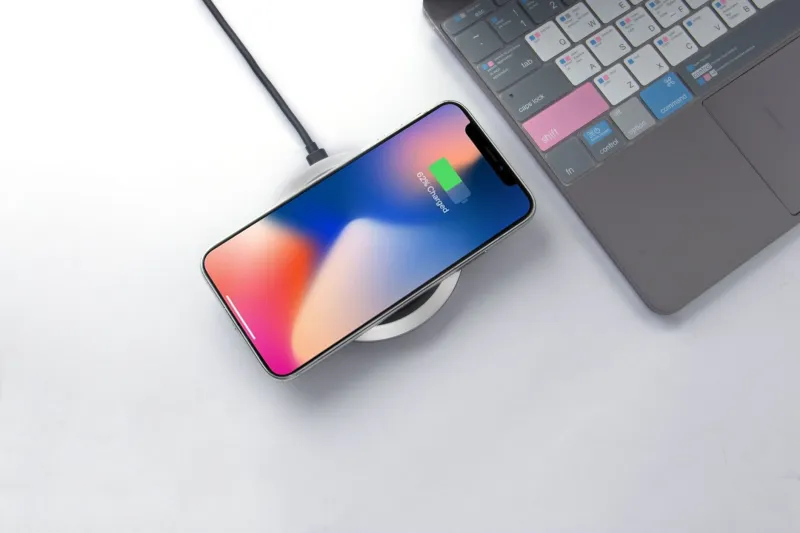
Every year, some brand rolls out a new phone at a splashy event and promises that wireless charging has finally arrived — faster, smarter, more universal than ever. And every year, millions of people get home, set their device on a pad, and wonder why it's barely warmer than when they left it. Sound familiar?
We've been testing wireless charging across a wide range of portable devices here at PocketPC Techs, and the results are... humbling. Not for the technology itself, which genuinely has improved. But for the gap between what manufacturers claim and what your nightstand reality actually looks like.
The Physics Problem Nobody Wants to Talk About
Here's the thing about wireless charging: it isn't magic. It's electromagnetic induction, and induction has rules. When you place a device on a Qi pad, the pad's coil generates a magnetic field that induces a current in the receiver coil inside your device. That process converts energy — and not all of it makes it to your battery.
Typical wired fast charging operates at 90–95% efficiency. Wireless? You're often looking at 70–80% on a good day, and that lost energy goes somewhere — it becomes heat. Heat is the enemy of lithium-ion batteries. It accelerates degradation, throttles charging speeds mid-session, and in some cases, causes your device to pause charging entirely until it cools down.
We tested a Samsung Galaxy S24 on three different charging surfaces: a Samsung-certified 15W pad, a generic 10W pad, and a direct USB-C cable at 25W. The cable filled the battery from 20% to 80% in 38 minutes. The certified pad took 67 minutes. The generic pad? A painful 94 minutes — and the phone ran noticeably warm throughout.
For earbuds, the gap is even more absurd. The AirPods Pro case supports wireless charging, but topping it off wirelessly takes nearly twice as long as a quick Lightning or USB-C connection. For something you're tossing in a bag between meetings, those extra minutes matter.
Why Tablets Are the Worst Offenders
If you've ever wondered why your iPad doesn't support wireless charging, you're not alone — and Apple isn't entirely wrong to hold back. Tablets have significantly larger batteries than phones, which means the heat and efficiency problems scale up dramatically. Getting meaningful wireless charging speeds on a 10,000+ mAh battery would require coil sizes and power delivery that would make the device thicker, heavier, and hotter than any consumer would accept.
Some Android tablets have tried anyway. The results aren't pretty. We tested a mid-range Android tablet with wireless charging support and watched it throttle from its advertised 15W down to around 8W within ten minutes of charging — purely due to thermal management kicking in. That's not a feature. That's a spec sheet lie with extra steps.
The Alignment Tax
Another real-world killer? Placement sensitivity. Most Qi charging pads have a sweet spot roughly the size of a half-dollar coin. Miss it slightly — which is easy to do when you're half-asleep — and your phone charges at a fraction of the rated speed, or not at all. We ran a casual test placing a phone on a pad 20 times without looking. It landed in the optimal zone fewer than half the time.
MagSafe from Apple partially solves this with magnets that snap the phone into alignment, and it works well — for iPhones. The broader MagSafe ecosystem hasn't spread to other devices in any meaningful way, and Android's equivalent efforts have been scattered at best.
What's Actually Coming That Might Help
There are a few technologies worth watching. Xiaomi has demonstrated 80W wireless charging in lab conditions, though real-world performance still lags behind. More interesting is the push toward resonant charging, which allows for slight misalignment tolerance and multi-device pads — one pad charging your phone, watch, and earbuds simultaneously without precise placement.
Longer range wireless charging — think charging across a room — has been teased by companies like Energous for years, but regulatory hurdles from the FCC and efficiency losses over distance have kept it firmly in the "coming soon" category for the better part of a decade.
Bluetooth-adjacent near-field charging using ultra-wideband technology is another area getting research attention, particularly for wearables and earbuds. Don't hold your breath for your living room to become a charging zone by next year, but the trajectory is real.
So Should You Bother?
Wireless charging isn't useless — it's genuinely convenient for overnight charging when speed isn't critical. For phones in particular, a quality certified pad on your nightstand is a perfectly reasonable setup. But if you're buying a device specifically because of its wireless charging specs, pump the brakes and read the fine print.
For tablets, don't factor wireless charging into your purchase decision at all — it's either absent or not worth using. For earbuds, it's a nice-to-have, not a reason to spend extra.
The cable isn't going anywhere. And honestly? For portable tech users who need reliable, fast power, that's not the tragedy the marketing makes it out to be.